ABSTRACT AMALGAMATES WITH STRUCTURE
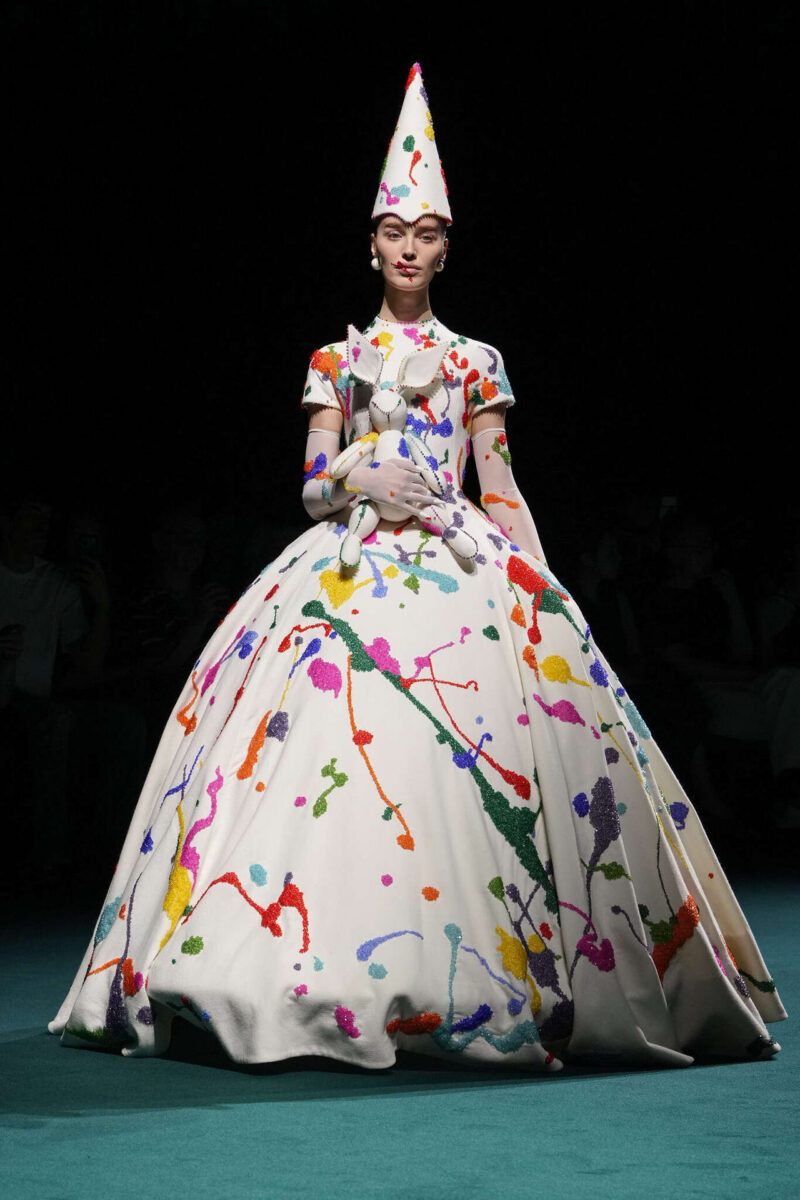
Robert Wun didn’t just present a collection—he unfolded a soul. That opening look, with its childlike drawings and plush toy, wasn’t whimsy. It was memory made wearable. From there, the journey turned deeper—fabric twisted like growing pains, silhouettes bent under the weight of becoming.
The Dôme de Paris loomed like a memory palace, echoing every fear, every fragile hope in the passage from childhood to who we become. Wun’s work is never just fashion. It’s emotional abstract stitched into structure, pain shaped into beauty. Dark? Yes. But also honest. And in that honesty, profoundly poetic.
Wun isn’t just making clothes. He’s rebuilding innocence with intention, reminding us that to create for children is to believe in tomorrow—despite everything. And in that act, he finds both purpose and relief. There’s deep courage in that. And beauty, too.
The opening looks felt like a return to origin—white as blank page, innocence, possibility. Those childlike embroideries, like paint flung with joy, then the bold wooden shapes in bright colorblocking—playful, almost toy-like, yet deliberate.
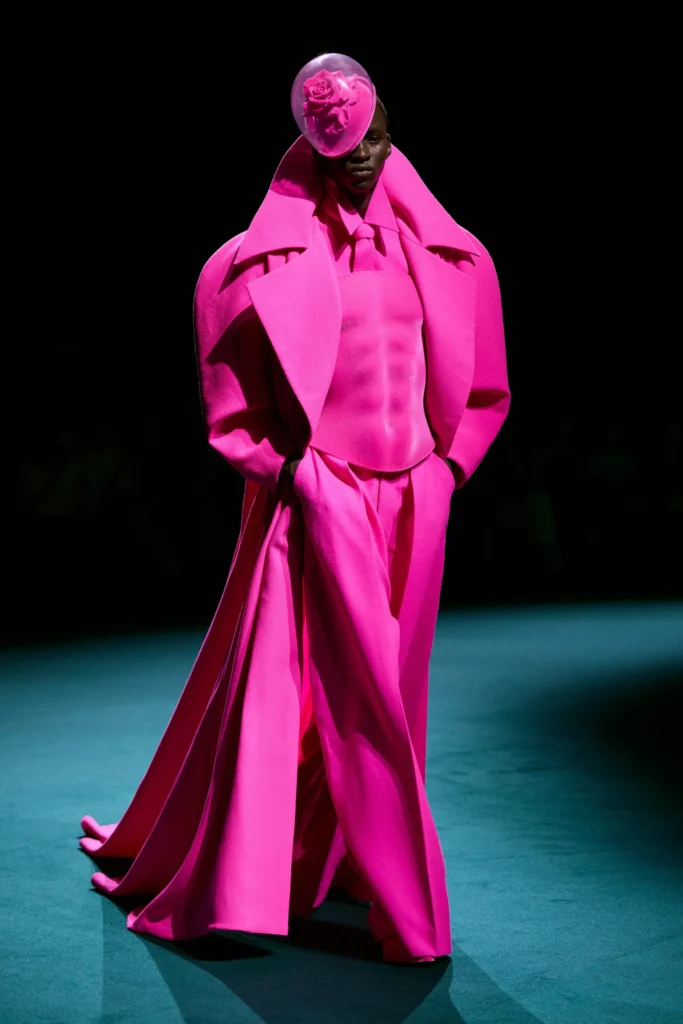
It’s as if Wun is rebuilding childhood not as fantasy, but as foundation. Each piece carries the lightness of make-believe, but with the weight of meaning behind it. Not just remembering how we played—but why it mattered.
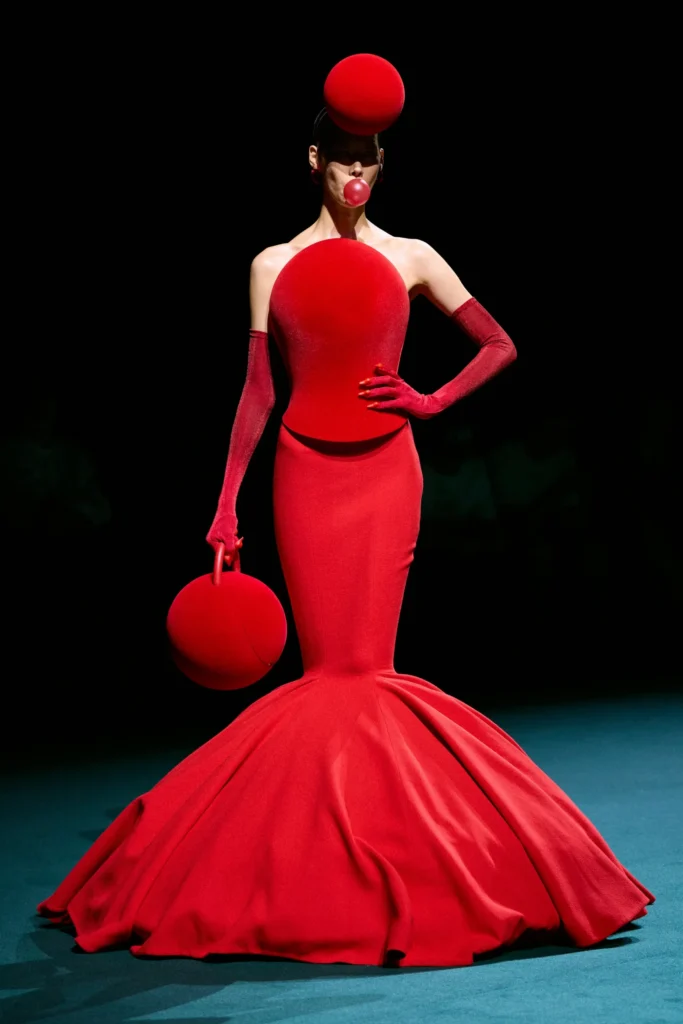
That red fishtail moment was pure theater—on the runway and in the front row. The spherical bodice felt like a sculptural heartbeat, and seeing Cardi B mirror it live? That wasn’t just styling. It was symbiosis—fashion echoing fashion, icon meeting art. A statement in crimson: bold, unmissable, alive.
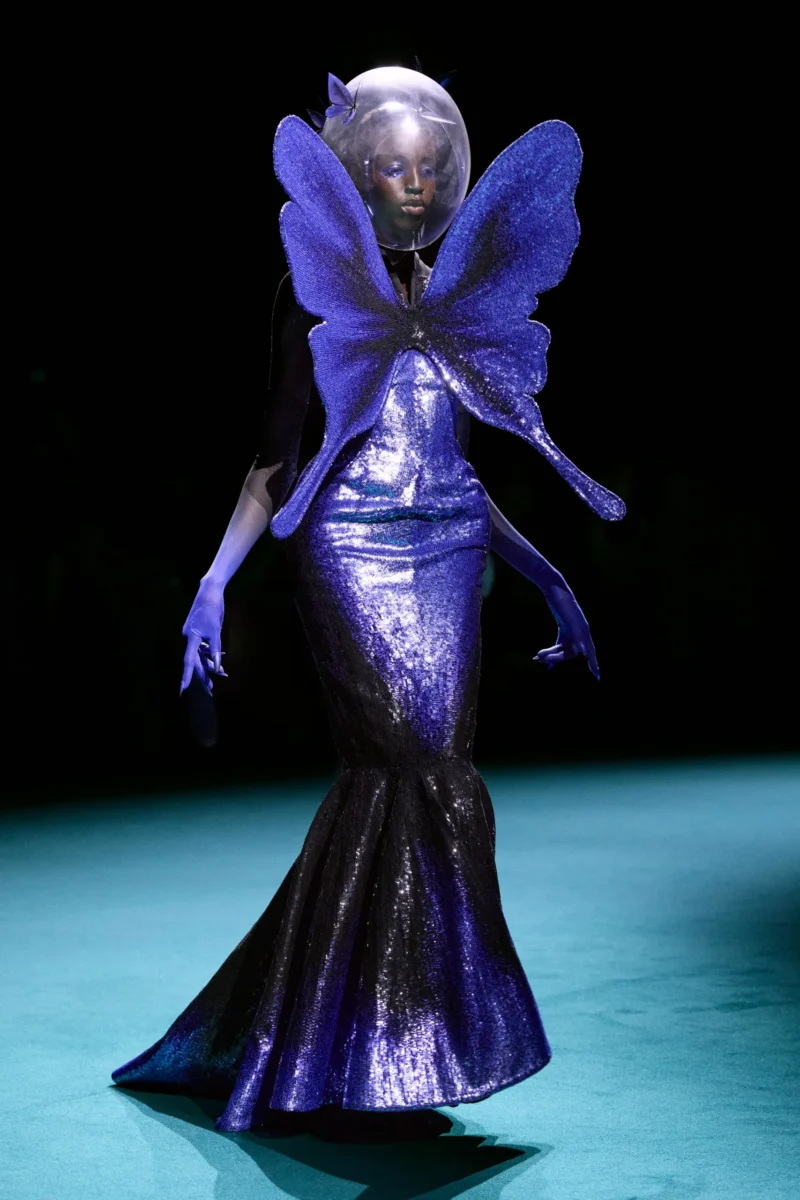
Wun wove nostalgia and self into something entirely new—Disney heroines reimagined not as fantasy, but as emotional touchstones, shaped by his own journey. Each surreal silhouette felt like a memory stretched into form: familiar, yet uncanny.
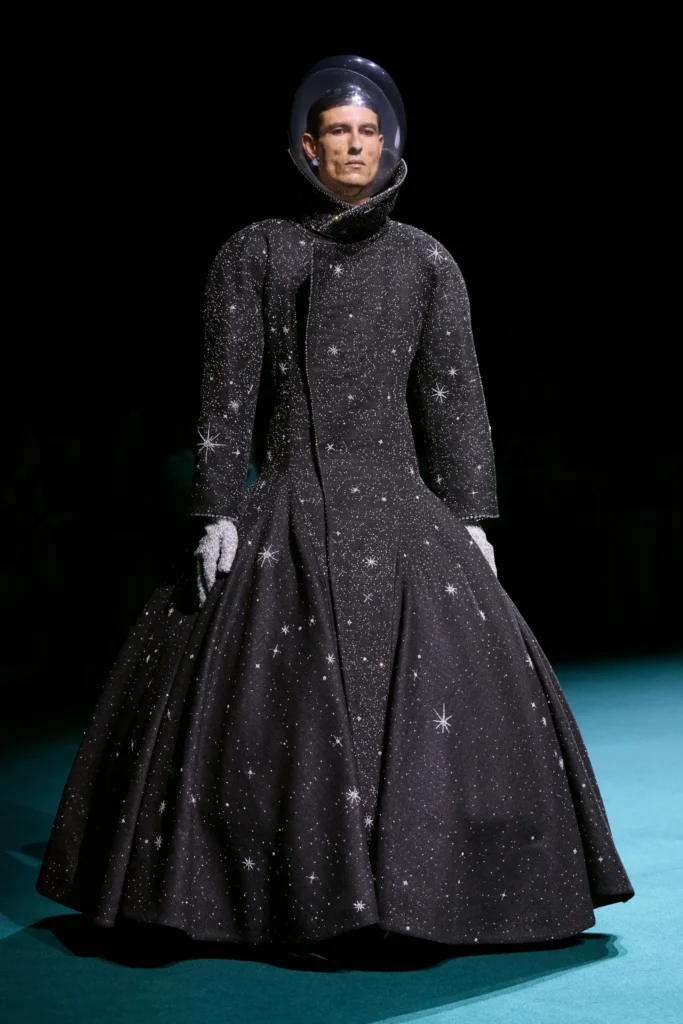
And structuring the collection like a child’s growth? Brilliant. It didn’t just show clothes—it showed transformation. From innocence to complexity, play to purpose. Fashion as a living, evolving story.
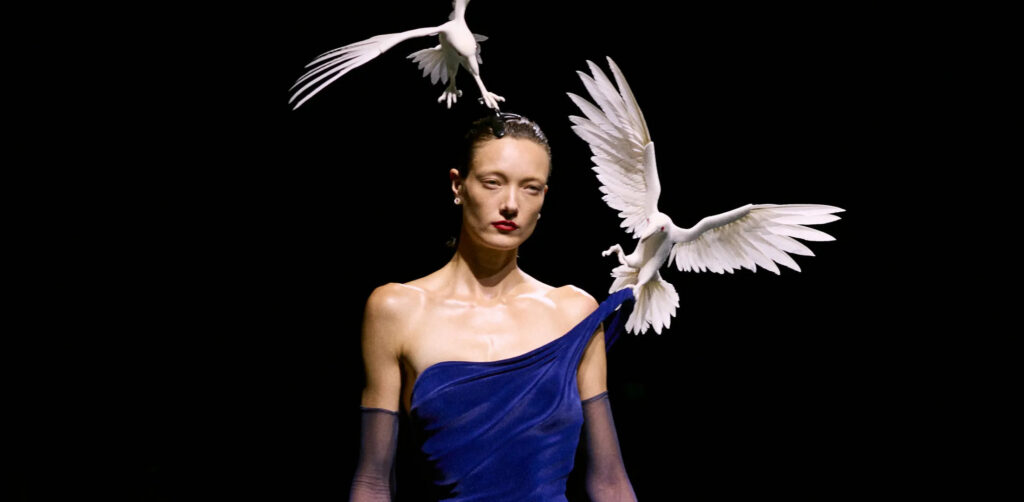
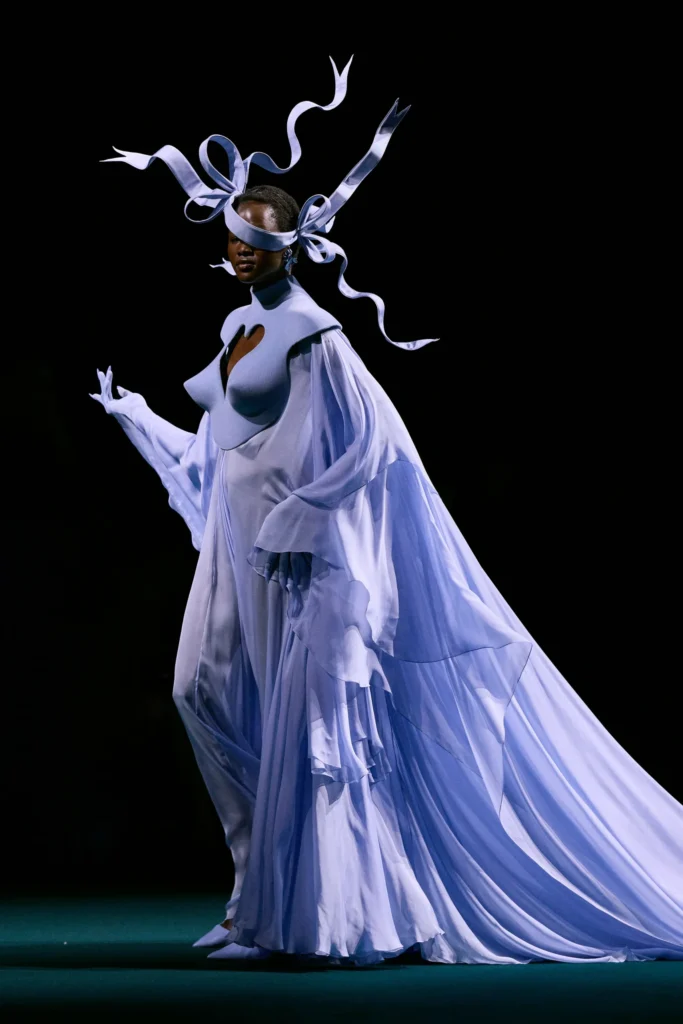
The blue velvet Snow White reimagining was hauntingly beautiful—like a memory half-remembered. The pleats and twists gave the gown movement and tension, as if the character had stepped out of the storybook and into real life, carrying its weight.
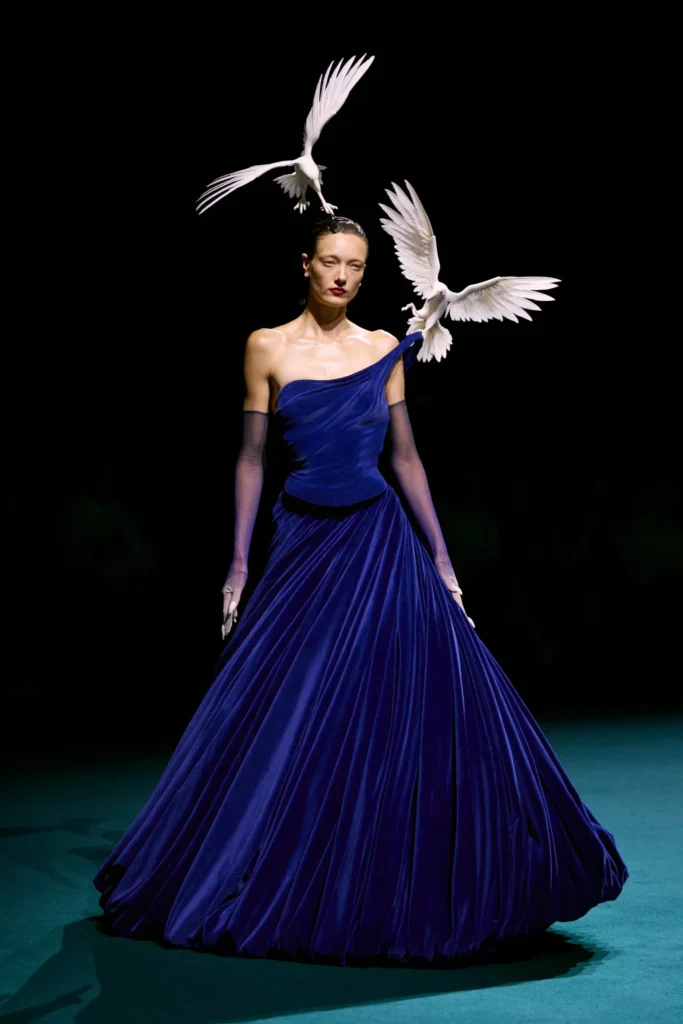
Those birds, perched delicately on shoulder and head, weren’t just detail—they felt like guardians, or thoughts made visible. Wun didn’t dress a character. He revealed her soul.
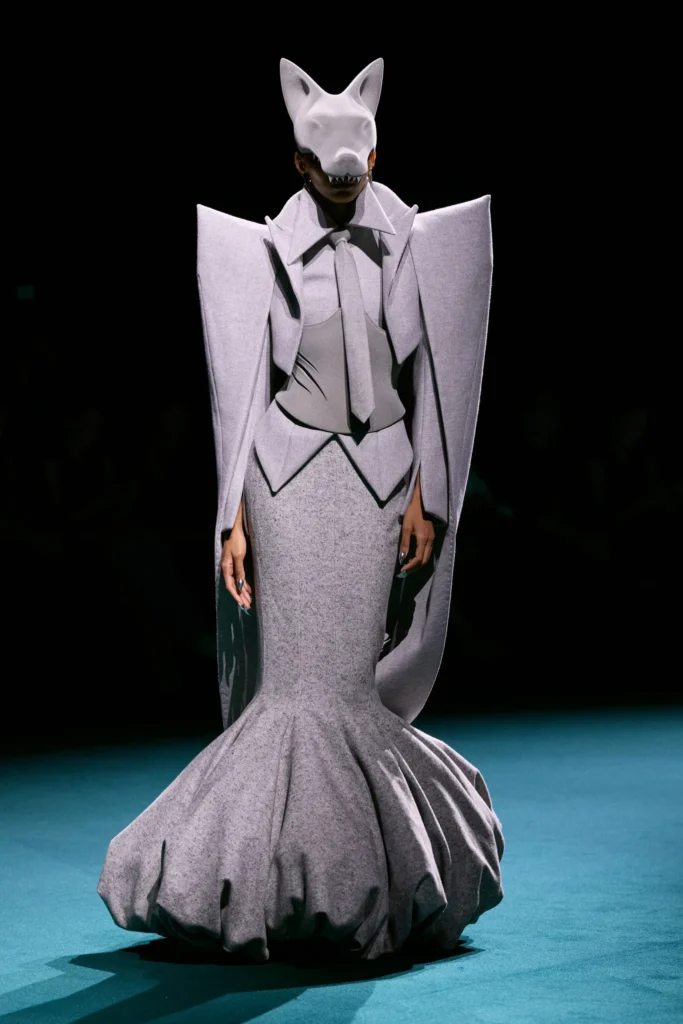
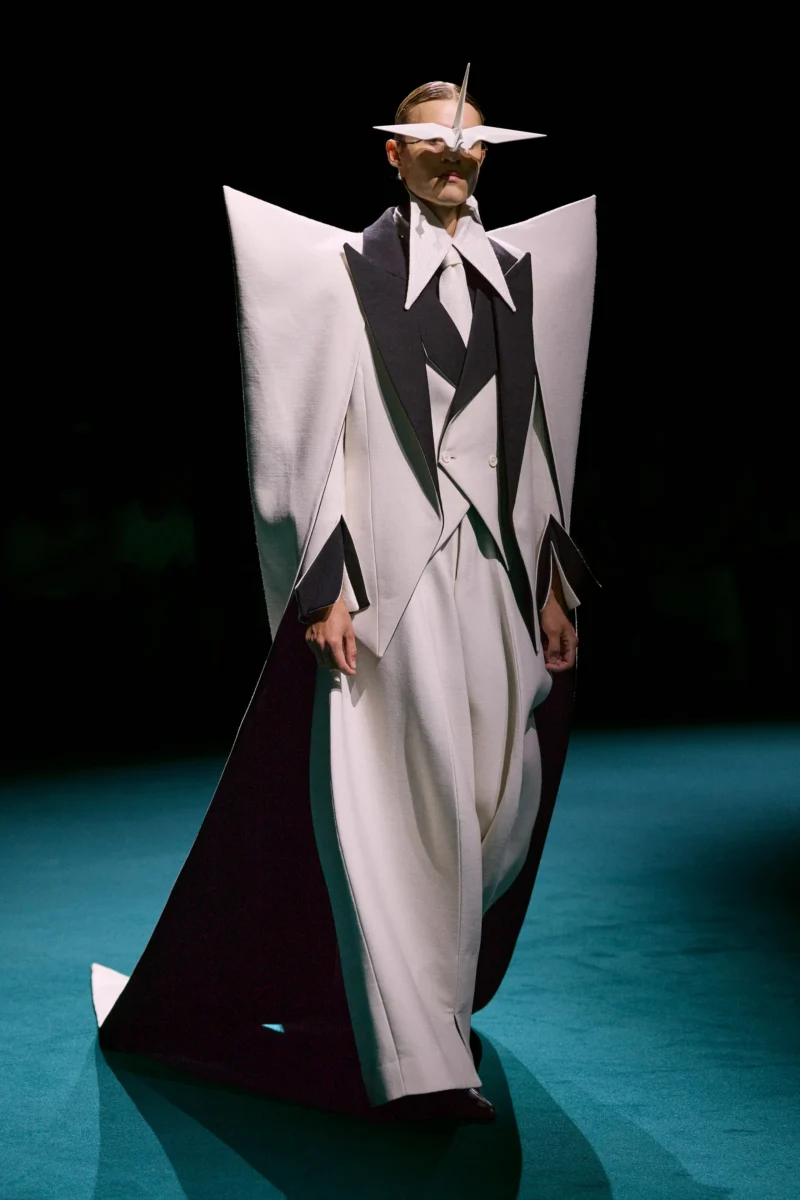
The tailored suit with those origami-inspired folds was structure meeting poetry—sharp lines folding into soft symbolism. It felt like childhood paper crafts grown into adult armor, each crease holding a memory of play. Wun turns discipline into dreamlike form, where even a suit isn’t just worn, but unfolded.
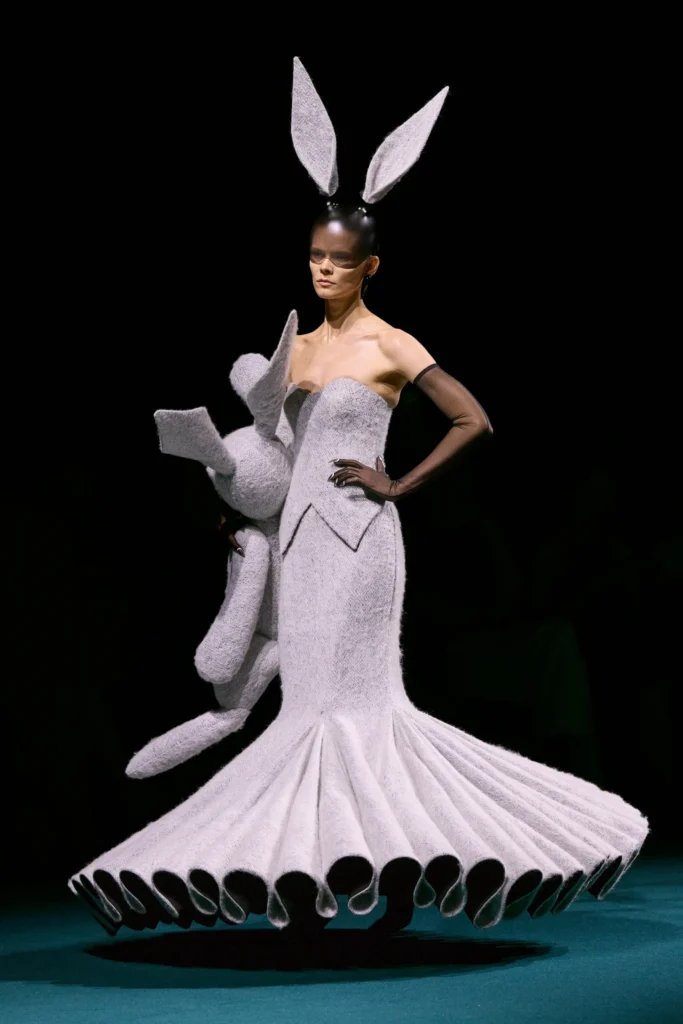
The Bambi-inspired look was devastating in its quiet power—pure white, like memory or mourning, the horned headpiece lending a mythic grace, the doll held close like an echo of loss. It wasn’t costume. It was tribute.
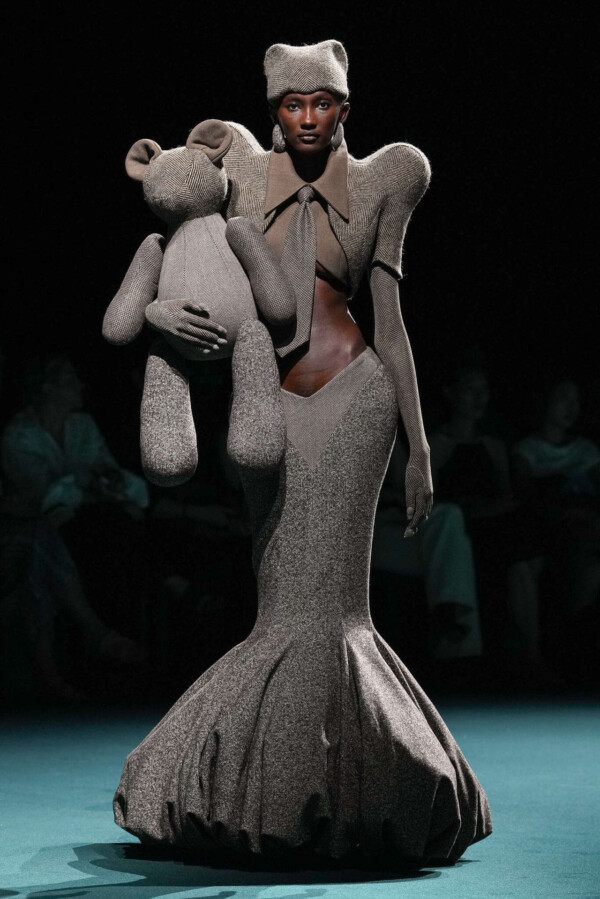
And those oversized toys woven into the collection? Not whimsy, but weight. The tweed teddy mirroring the jacket’s shoulders—softness built into structure, childhood carried into adulthood. Wun doesn’t just reference stories. He lets them live in the clothes.
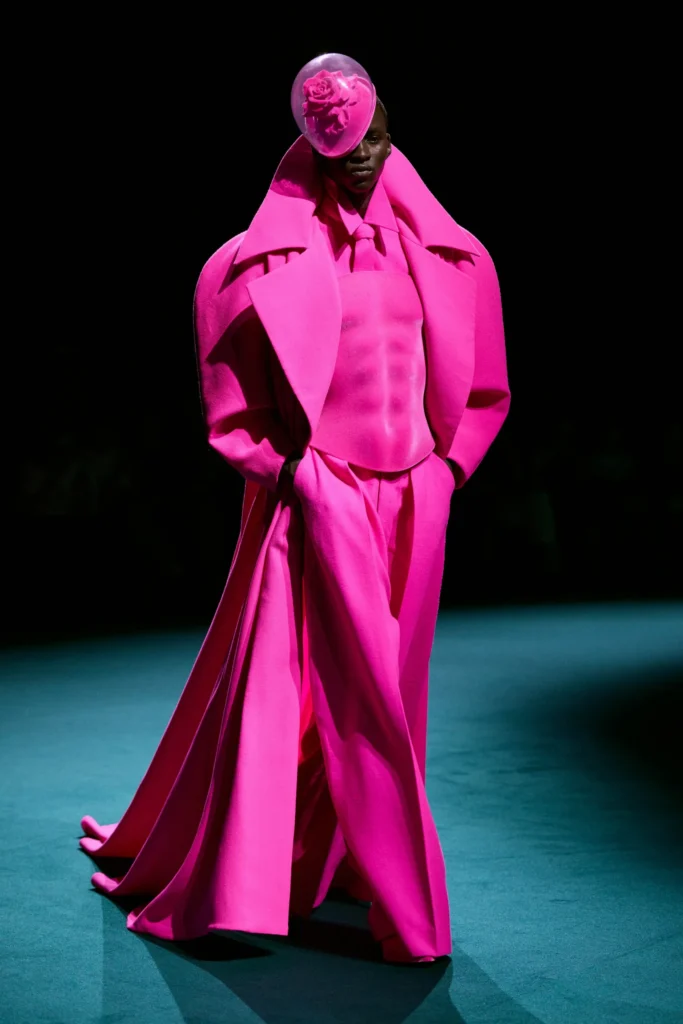
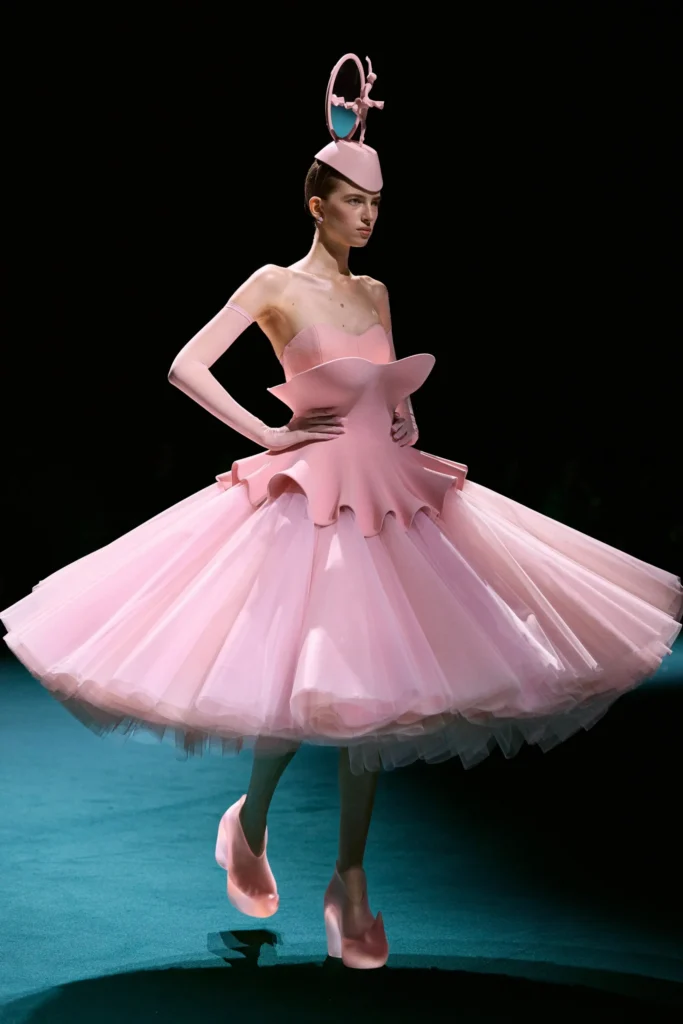
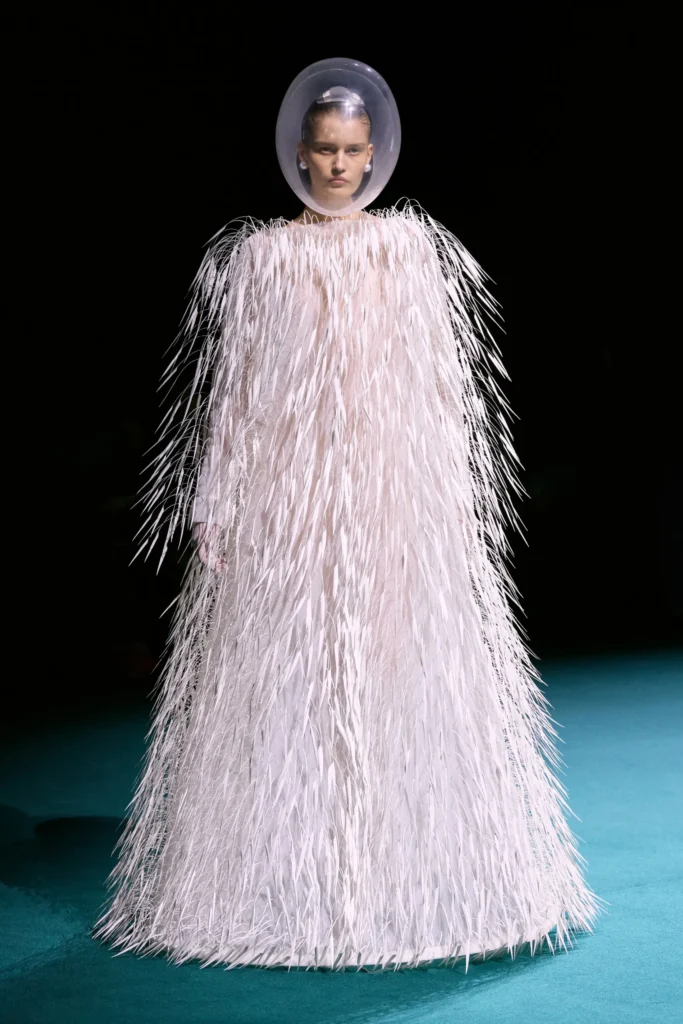
The space helmet and ballerina looks hit deep—not just as design, but as dreams deferred. That transparent helmet, born from a childhood space program, feels like a vessel for what could’ve been. And the ballerina in pink tulle, with the bodice peeling away like a memory unwinding, crowned by a jewelry box figurine?
It’s as if the dream is still playing, even though the body has moved on.Wun doesn’t hide the ache of abandoned paths. He stitches them into the present—tender, visible, honored. Fashion becomes a way to carry what was left behind.
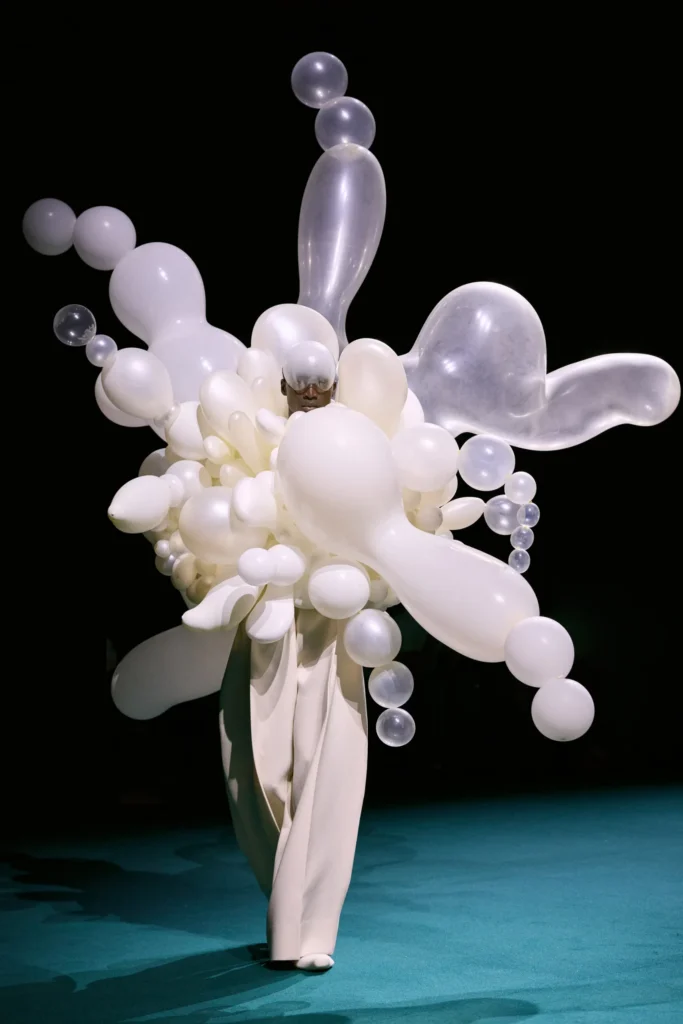
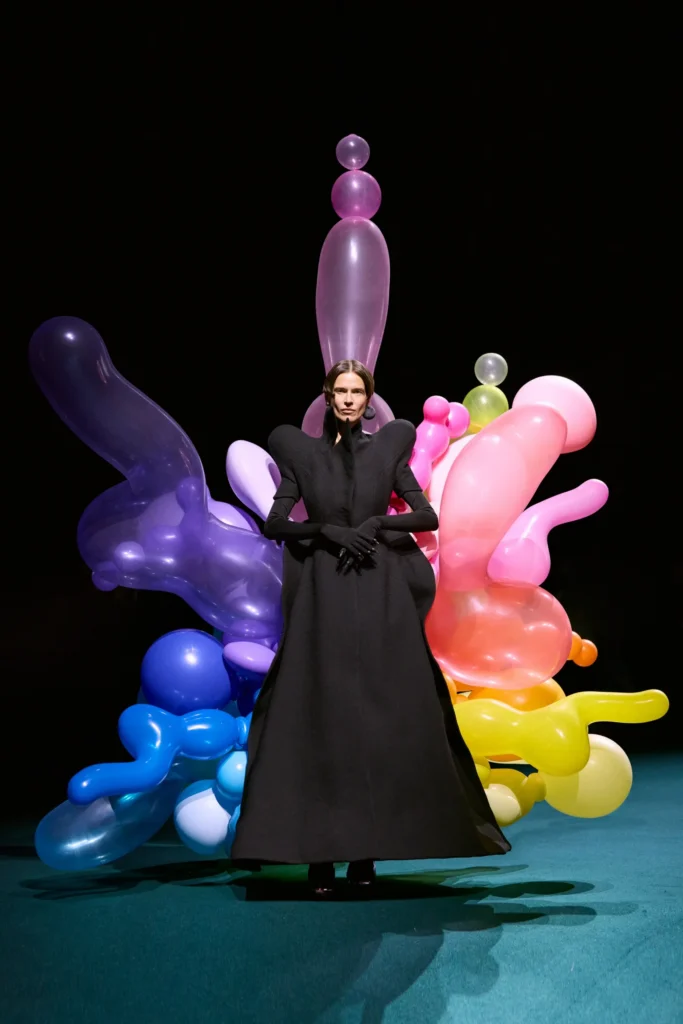
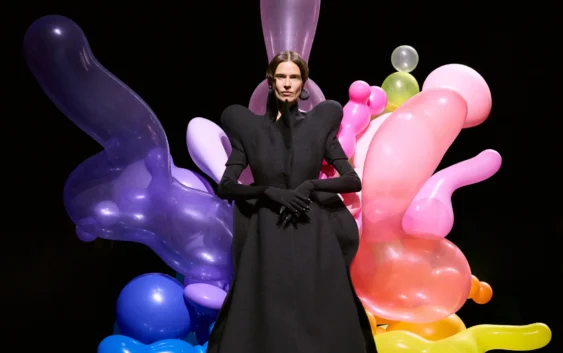
The finale was breathtaking—those tailored silhouettes interrupted by real balloons, so fragile and fleeting, a perfect metaphor for infancy’s brief magic. Such a bold technical risk, yet it felt effortless. And the giant inflatable echoing through the space, tied to Skullpanda, turned the show into a shared dream—childlike wonder, grown monumental. Wun doesn’t just close a collection. He closes a chapter.